
5 Signs Brake Repairs Should Be Your Car’s Top Priority
Brake maintenance is a crucial aspect of vehicle safety and performance. Ignoring signs of brake failure can lead to dangerous driving conditions and expensive repairs. This introduction highlights critical warning signs that require immediate attention from a trusted car repair shop to maintain the integrity of your vehicle's braking system and keep you safe on the road. Taking a proactive approach to automotive maintenance ensures that minor friction issues do not escalate into catastrophic mechanical failures while driving. Ultimately, your brakes are your vehicle's most important safety feature, and keeping them in peak condition preserves peace of mind during daily commutes. Neglecting this system compromises your ability to avoid collisions and puts everyone on the road at serious risk.
Hearing Unusual Noises
Unusual noises during braking are often the first symptom of underlying issues within the brake system. One common noise is a high-pitched squeal, often caused by worn-out brake pads. The sound occurs when metal wear indicators come into contact with the rotor, alerting the driver that it is time to visit a car repair shop for a change. Ignoring this squeal means the friction material will completely disappear, leading to direct metal-on-metal scraping that ruins the smooth surface of your braking discs. This constant friction generates extreme thermal stress, accelerating the degradation of nearby wheel components.
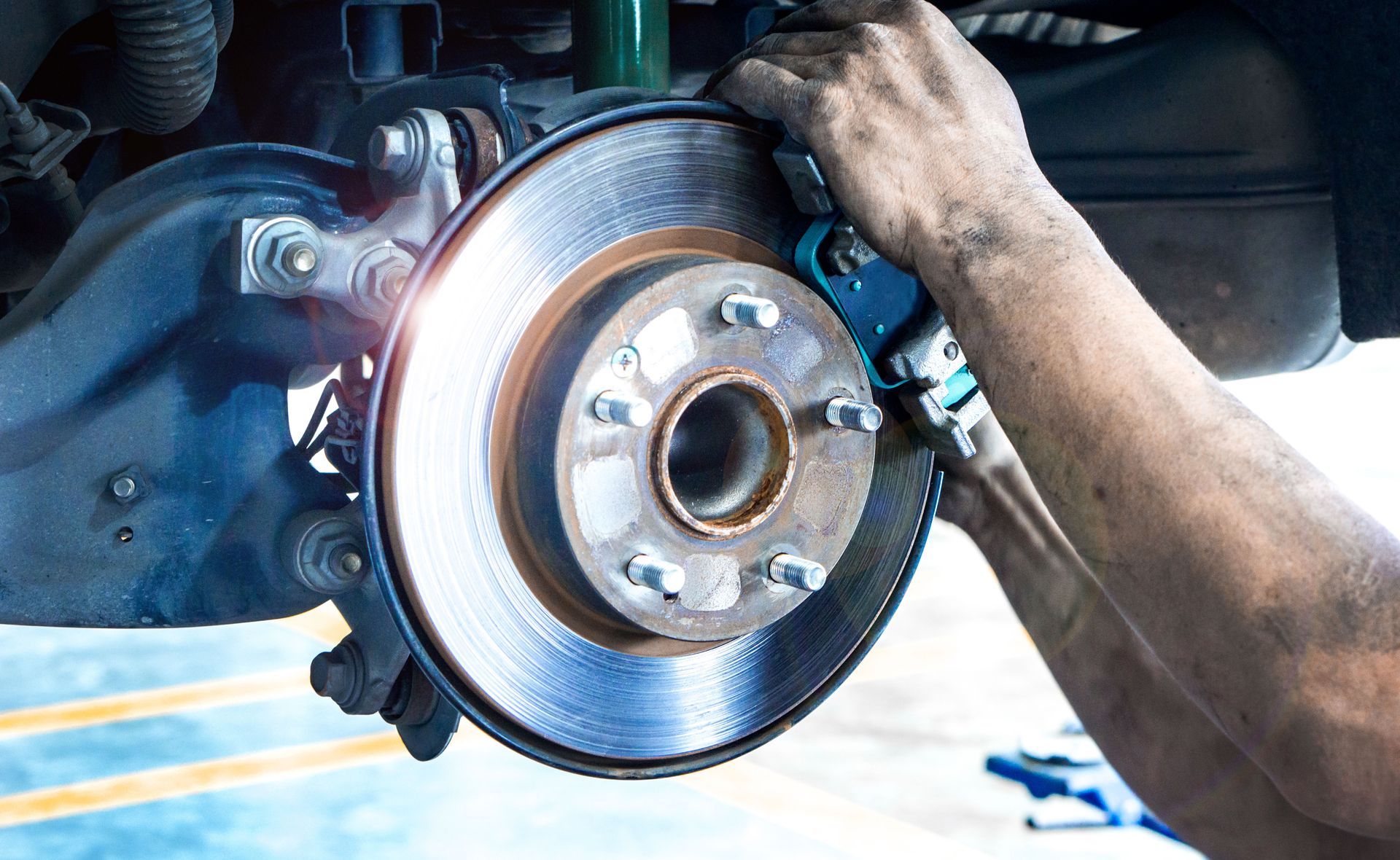
Grinding noises during braking are another major red flag that indicates immediate mechanical distress. This sound typically suggests that the brake pad material has completely worn away, leaving the bare metal backing plate to press against the rotor. Such contact can quickly score, gouge, and warp the rotors, leading to costly replacements that could have been easily avoided with earlier intervention and routine brake pad swaps. When grinding occurs, your stopping distance increases exponentially, putting everyone on the road at risk. This metal-on-metal friction can also generate enough heat to weld components together or crack the rotor under heavy braking pressure.
Other noises, such as clicking, rattling, or thumping, may point to loose components, missing anti-rattle clips, or problems with the rear brake drums. These sounds generally indicate that something within the braking architecture is misaligned, worn out, or requires secure fastening. According to Bankrate, most vehicles require maintenance checkups about every 5,000 miles, which helps catch these sounds before they turn into full component failures. Regular visits to a technician ensure that small hardware components are lubricated and secure.
Feeling Vibrations or Pulsations
Vibrations or pulsations felt through the brake pedal or steering wheel are common indicators of brake system issues. One prevalent cause is warped rotors, which occur when excessive heat causes the metal discs to lose their perfectly flat shape. Warped rotors lead to uneven contact with the brake pads, causing a distinct pulsating sensation that intensifies at highway speeds and reduces overall driver control. Driving on warped rotors also strains your vehicle's wheel hubs, leading to premature wear on critical suspension components over time.
Another cause of pulsations is heavily worn brake pads that have transferred material unevenly onto the rotor surface. Over time, pads lose their friction material, reducing their ability to provide consistent braking pressure across the face of the disc. This can manifest as structural vibrations that compromise braking efficiency, making a trip to a car repair shop necessary to restore smooth operation and prevent secondary damage to your wheel bearings. This lack of smooth contact means your vehicle requires more physical effort to slow down safely.
In some cases, loose or misaligned components within the steering and braking systems exacerbate these pulsations. Caliper bolts that wear out, lose their lubrication, or lack proper tightening torque can cause undue movement during deceleration. Combining component maintenance with regular professional inspections can mitigate these effects and ensure a secure, highly responsive braking experience during emergency stopping scenarios. Keeping these moving parts properly lubricated prevents the judder that ruins your driving experience.
Experiencing Reduced Responsiveness
Brake responsiveness is vital to vehicle safety, and any reduction in braking power should be addressed expeditiously. A common cause of reduced responsiveness is brake fluid leaks within the master cylinder, calipers, or wheel cylinders. These leaks diminish hydraulic pressure within the brake lines, adversely affecting overall stopping distance and causing the pedal to sink stubbornly toward the floorboard. If the fluid level drops too low, the system will fail to build the necessary pressure required to compress the pads against the rotors.
Another significant concern is overheating brakes, which can occur during extended downhill driving, heavy towing, or due to faulty, dragging components. Overheating reduces the ability of the pads and rotors to effectively dissipate thermal energy, resulting in a dangerous phenomenon known as brake fade. A faded brake system typically feels completely unresponsive and fails to decelerate the vehicle as expected under pressure, creating a terrifying situation for the driver. When fade occurs, the friction material temporarily loses its molecular grip, drastically reducing vehicle control.
Old or contaminated brake fluid also contributes heavily to reduced braking efficiency. If brake fluid absorbs moisture over time, its boiling point decreases dramatically, causing gas bubbles to form within the hydraulic lines under high temperatures. Regularly checking and replacing brake fluid at a qualified car repair shop ensures optimal hydraulic function and prevents dangerous pedal fade during unexpected emergencies on the highway. Clean fluid protects the internal metal pistons from corroding and locking up prematurely.
Noticing Pulling to One Side
If a vehicle pulls sharply to one side during braking, it is often indicative of a sticking or frozen brake caliper. When a caliper piston does not properly release or apply its grip, the uneven application of braking power forces the vehicle to veer off course. This behavior can be incredibly hazardous during sudden stops and requires an immediate mechanical inspection to keep the car tracking straight. It forces the driver to constantly fight the steering wheel just to maintain a straight line during deceleration.
Uneven brake pad wear across the front axle is another common contributor to vehicle pulling. When pads wear down differently on opposite sides of the vehicle due to restricted slide pins, they apply imbalanced braking force, leading to steering instability. This condition not only jeopardizes your safety but also accelerates wear on your tires and front suspension components, driving up future repair bills. This imbalance means one side of your vehicle is doing all the heavy lifting during a stop.
Beyond the brake system itself, underlying alignment and suspension issues may exacerbate pulling while braking. Misaligned wheels, worn control arm bushings, and faulty suspension systems disrupt vehicle stability, highlighting the interconnected nature of automotive care. Regular checks at a local car repair shop can help avoid such challenges and ensure safe, straight handling under all driving conditions. Correcting the alignment ensures that braking forces are distributed equally across all four tires.
Responding to Warning Lights
Dashboard warning lights are critical indicators of potential vehicular issues, particularly for the braking system. A lit brake system warning light often signals low brake fluid levels or a severe hydraulic pressure drop within the lines. It is essential to address this illumination immediately to avoid total brake failure while operating the vehicle, as driving with this light on presents an extreme safety hazard. A technician can hook up diagnostic tools to locate the exact source of the electronic alert.
Recognizing the warning signs of brake system issues is essential for the safety, efficiency, and longevity of your vehicle. Prioritizing timely interventions not only maintains optimal driving conditions but also prevents costly secondary damage to your vehicle's steering and suspension. Routine professional checkups ensure that hidden issues are addressed before they compromise your safety on the road. For more information about the services that we offer, reach out to our incredible team at Zentner's Auto Service today!
Share On: